Cardiff student moving guides
Packing a Student Room for Summer Storage in Cardiff
A practical packing system for summer storage: decide what stays with you, prepare each item, number the boxes and make the eventual collection easier.
Planning a student move in Cardiff? Find help with halls, house shares and moving home, or request a moving quote.

Packing a student room for summer storage is easier when you plan for the day you get everything back. Boxes need to protect their contents, be manageable to carry and tell you what is inside. A numbered inventory and a separate travel bag can save you from unpacking half a storage unit to find one document.
Start by booking a suitable storage option yourself and checking its rules. Use the student storage transport page to request a quote through Van and Man Cardiff for the journey to or from the facility. The moving company supplies the transport, and you book the storage space separately. The provider's required packaging, accepted items and access arrangements should shape your packing.
Sort the room into four destinations
Create four lists: staying with you, going into storage, going to somebody else and being disposed of appropriately. Work through one part of the room at a time. Check desk drawers and the space under the bed before buying boxes, because the visible shelves may represent only part of the load.
Keep identification, medication, travel paperwork, valuables and items needed for summer work or study with you. Include chargers and a change of clothes in the travel bag. Store bulky possessions only when you expect to need them again and the full cost of storage and transport makes sense.
For belongings you no longer want, Cardiff DIGS provides student move-out donation and recycling guidance. Check the current options and accepted items before travelling to a donation point. Do not pack accommodation-owned furniture or equipment into your own load.
Choose containers around the contents
Use sound boxes that can be closed securely and carried without their bottoms sagging. Keep dense contents in smaller containers, and reserve larger ones for lighter items. Reused boxes can be useful, but remove or cover misleading old labels and reject anything damp, damaged or unsuitable for the load.
| Contents | Packing approach | Useful label |
|---|---|---|
| Books and folders | Use a small sturdy box and stop before it becomes difficult to handle. | Course books; box number. |
| Clothes and bedding | Wash where needed, dry completely and use clean containers. | Winter clothes or bedding. |
| Crockery | Wrap pieces separately, cushion the box and prevent movement inside. | Kitchen; fragile. |
| Monitor and electronics | Use suitable protective packaging, preferably the original where available. | Item name; keep upright if its packaging requires it. |
| Cables and small fittings | Bag and label them with the equipment they belong to. | Device name or furniture item. |
Check unusual items with the storage provider before packing them. Ask about food, liquids, batteries and anything with particular handling needs. Packaging something neatly does not establish that the facility accepts it.
Finish cleaning and drying before sealing
Empty food containers, wash cookware and let it dry thoroughly. Check bottles for leaks and think carefully about whether liquids need storing at all. Keep toiletries away from books, paperwork and electrical equipment, and follow the provider's rules for any liquids you do keep.
Do not seal damp towels, sports kit or bedding because you are running short of time. Schedule laundry early enough for everything to dry. Clean the storage containers too, particularly anything previously used for food or kept in a damp place.
Remove loose accessories from electronics and label their cables. Protect screens without putting pressure on them. If you need to dismantle your own furniture, photograph it first, keep fixings together and check how the manufacturer recommends handling the parts.
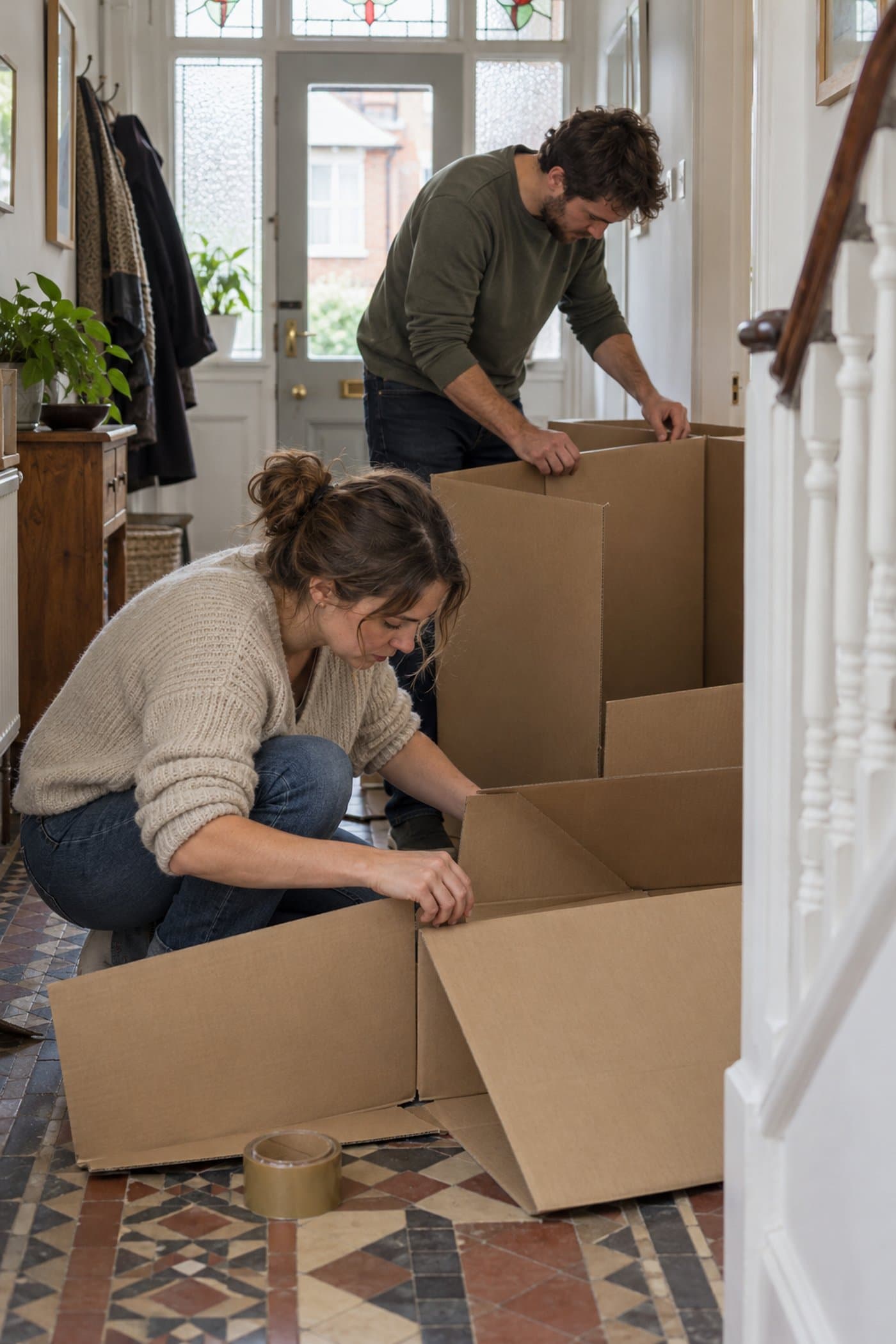
Create labels that will still make sense in September
Give each package a number and write a short contents description on the top and side. Record the numbers in one list on your phone, with a backup you can access elsewhere. A photograph of the contents before sealing can help when several boxes have similar labels.
Mark anything you will need first after returning. A box containing bedding and basic kitchen items may deserve easier access than winter decorations. Discuss how to place the load with the storage provider where relevant; access arrangements differ between facilities.
Our guide to moving boxes can help you estimate packing supplies. Update the count once you have gathered kitchen, bathroom and bicycle-storage belongings, rather than basing it only on the bedroom.
Make the packed load practical to carry
The HSE's handling guidance recommends planning the lift, removing obstacles and getting help when a load is beyond what you can safely manage. Apply those principles when preparing boxes: avoid awkward, overfilled packages and leave a clear route through the room.
Tell the mover about stairs, access doors and the distance to the vehicle. Keep packed boxes inside an appropriate space until loading begins rather than blocking shared corridors. If an item needs two people or particular equipment, raise it when requesting transport.
Plan the return journey before handing over the load
Record the facility address, booking reference, access instructions and the person responsible for admitting the vehicle. Check what happens if your return date changes and whether there are notice requirements. Keep the storage agreement and inventory together.
When arranging student moving transport, send the finished package count, larger-item list and both addresses. Explain any deadline for leaving the residence or entering the facility. The final packing check is simple: every item has an owner, every package has a label, and everything you need during the summer is travelling with you.
Sources for this guide
The official sources are linked in the relevant sections above.
- Health and Safety Executive: Good handling technique
- Cardiff DIGS: Students on the Move
Plan your student move
Send your collection address, destination, moving date, floor and list of belongings. The moving company can then quote for the transport and carrying help you need.
Request a student moving quoteYour enquiry is passed to a local firm we work with, who provides the quote and carries out any move you book. Your agreement for the work is with the mover.